Expertise
The studio was born from a passion. Upon discovering lithography and its centuries-old presses, Christophe Varey decided to open his own printing studio. He learned to operate the press from the person who ran it before him, and who still accompanies him.
Lithography in four steps
From the Greek Lithos, stone. Graphein, to write. 1796, Munich. Alois Senefelder discovers that a greasy drawing made on limestone can be printed over and over again.
- Drawing on the stone. The artist draws directly on a limestone block, with a lithographic crayon or greasy ink.
- Water and grease repel. The stone is dampened: water settles everywhere except on the greasy drawing. Nothing is carved, it is all chemistry.
- Ink, then press. The roller lays ink on the drawing alone. The sheet then goes through the studio’s 1850 hand press.
- An original print. Each sheet is pulled by hand in a limited edition, numbered and signed by the artist. It is not a reproduction.
Writing on Stone
The word comes from Greek: lithos, meaning stone, and graphein, meaning to write. The technique was invented in 1796 in Munich by Alois Senefelder, who was looking for an inexpensive way to print his texts. He discovered that a drawing made with a greasy medium on a lithographic stone can be inked and then transferred onto paper, indefinitely.
Artists quickly embraced it. Goya, Delacroix, Daumier, then Toulouse-Lautrec and his posters, and later Picasso, Miró or Chagall: lithography became one of the major languages of printmaking.
Water and Grease
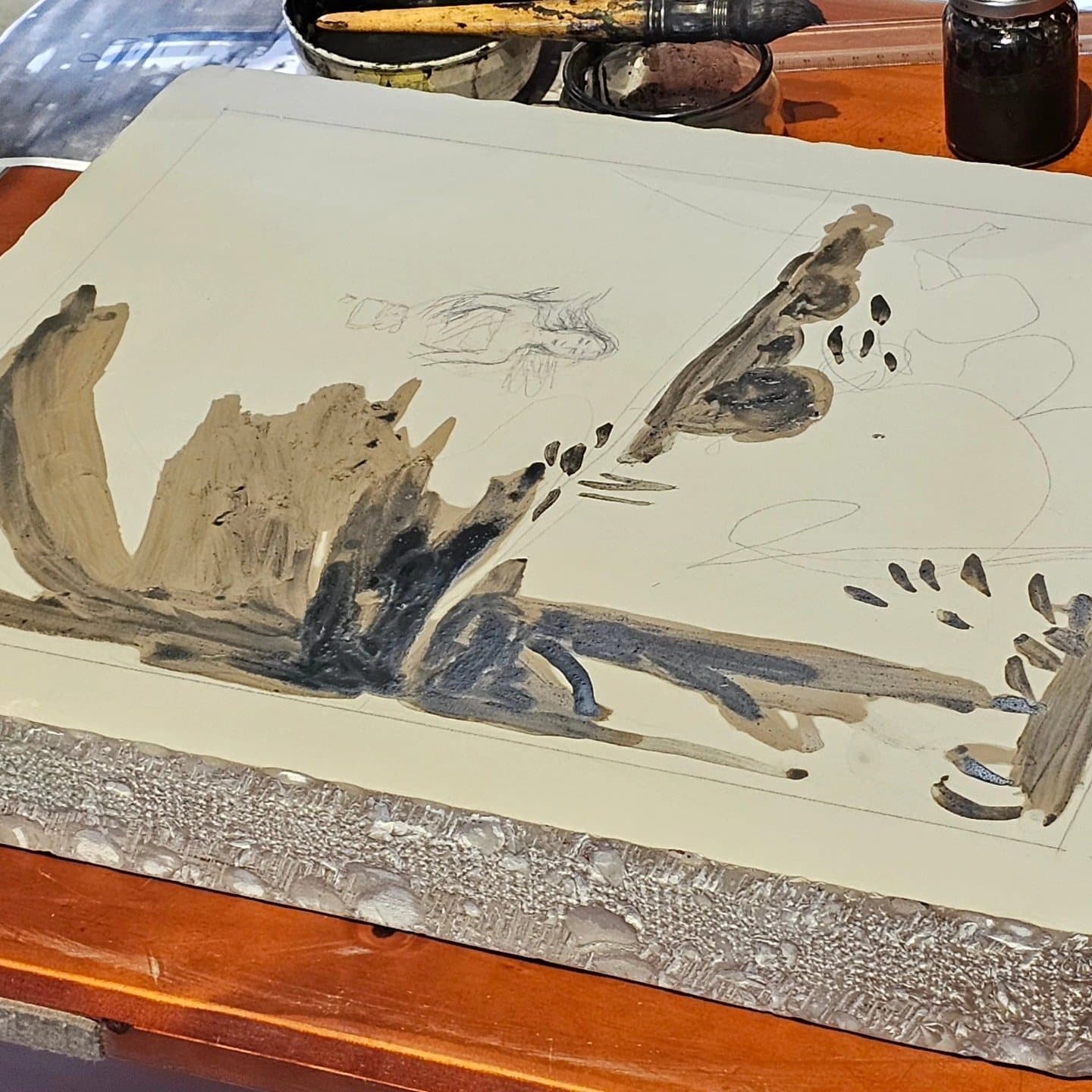
Unlike engraving, nothing is incised: the surface of the stone remains perfectly flat. Everything relies on chemistry. The artist draws directly onto the stone, using a lithographic crayon or greasy ink, with all the freedom of drawing or wash.
The stone is then prepared with slightly acidified gum arabic, which fixes the drawing. When printing, it is dampened: water settles everywhere there is no drawing. The ink roller then deposits its colour only on the greasy marks.
From Stone to Sheet
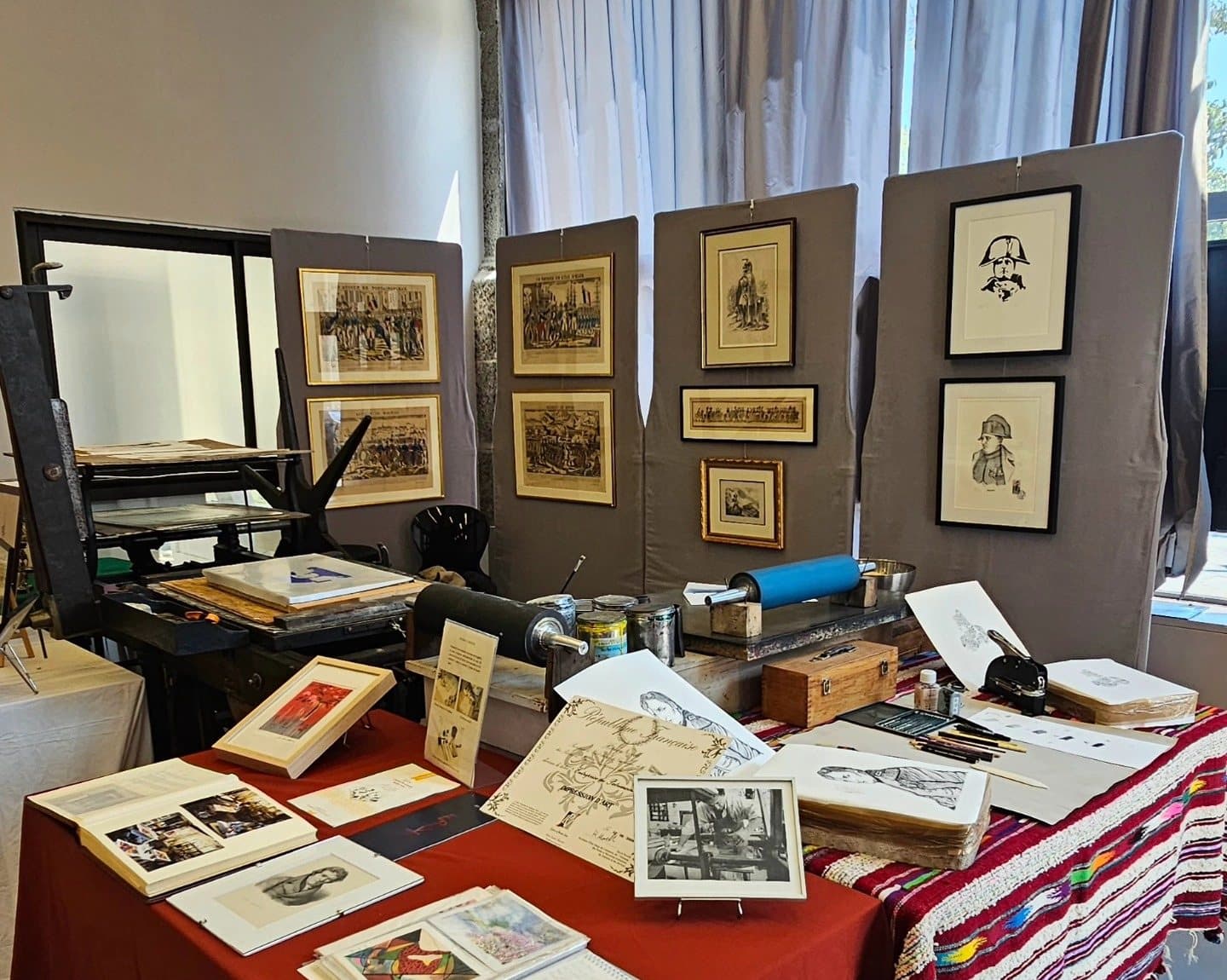
The stone is first grained, abraded until the previous image is erased: the same stone can be used dozens of times. Then comes the drawing, followed by the preparation, then inking, renewed before each sheet.
The paper is placed on the inked stone and the assembly passes under the scraper bar of the press, which exerts strong pressure. For a colour print, each colour has its own stone and its own pass. Registration marks, those you can see on this website, ensure that each colour is perfectly aligned.
The Original Print
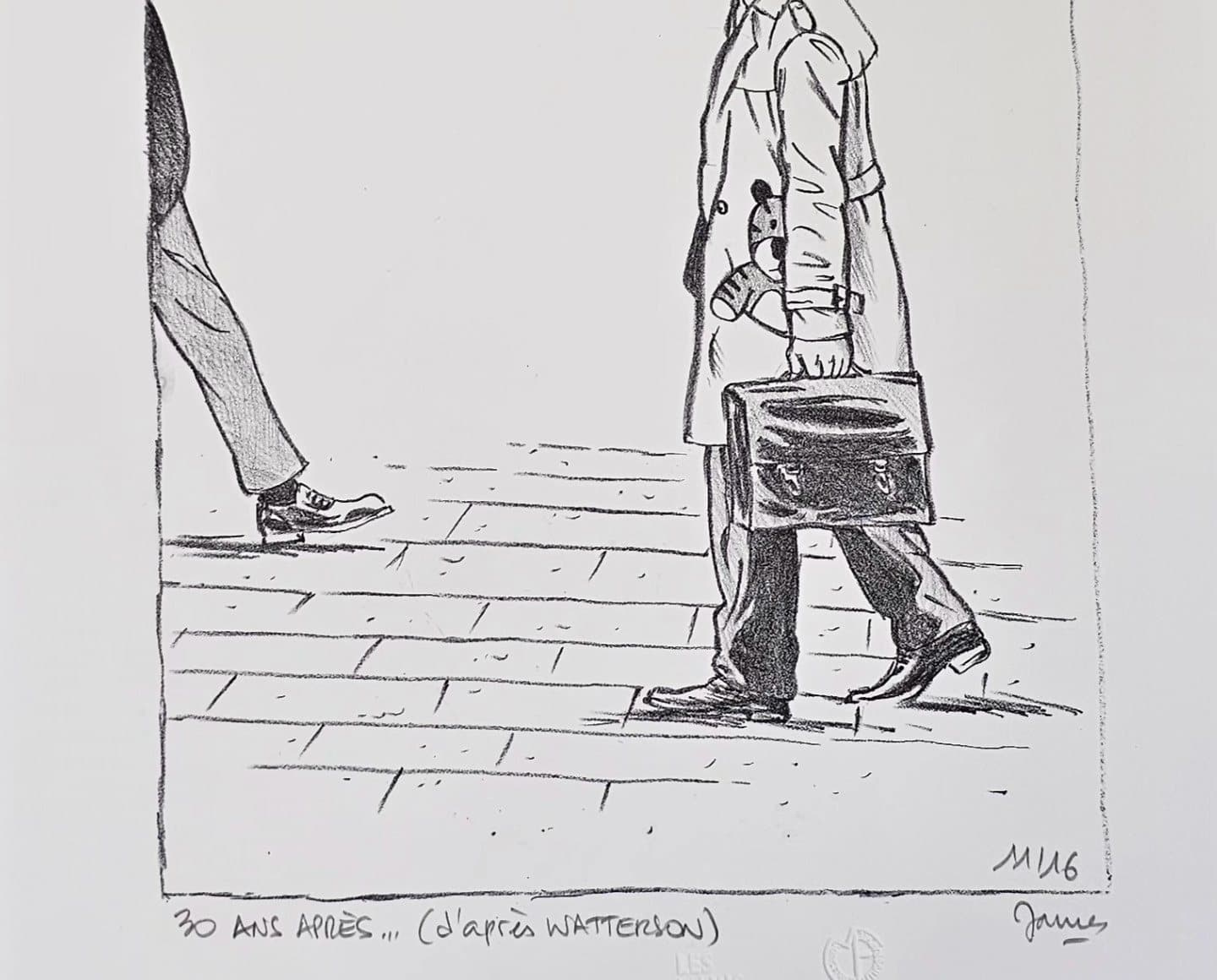
An original lithograph is not a reproduction: the artist designs it specifically for the stone and participates in its printing. The number of copies is limited, then each sheet is numbered and signed in pencil. The inscription 11/16 indicates the eleventh copy from an edition of sixteen.
Before the edition is printed, the artist approves a proof, known as the 'bon à tirer' (printer's proof). A few artist's proofs, marked E.A., may be added to the edition.
And Screen Printing
The studio also uses screen printing. The ink passes through a silk screen stretched over a frame, except where areas have been blocked. One screen per colour, flat, bold and bright areas of colour: this is the technique used for posters and brightly coloured editions.
What the studio offers
Printing for Artists and Publishers
Printing of lithographs and screen prints, in black and white or colour, from the drawing on the stone to the numbered edition. Each project is subject to a quote based on the format, number of colours and edition size.
Introduction to Lithography
Discover the technique at the studio: prepare the stone, draw, ink and print your own proof under the press.
Demonstrations
The studio travels with its press to fairs, festivals and bookshops to demonstrate lithography live.
Lithographs for Sale
Original prints are available at the studio and presented in the website catalogue.